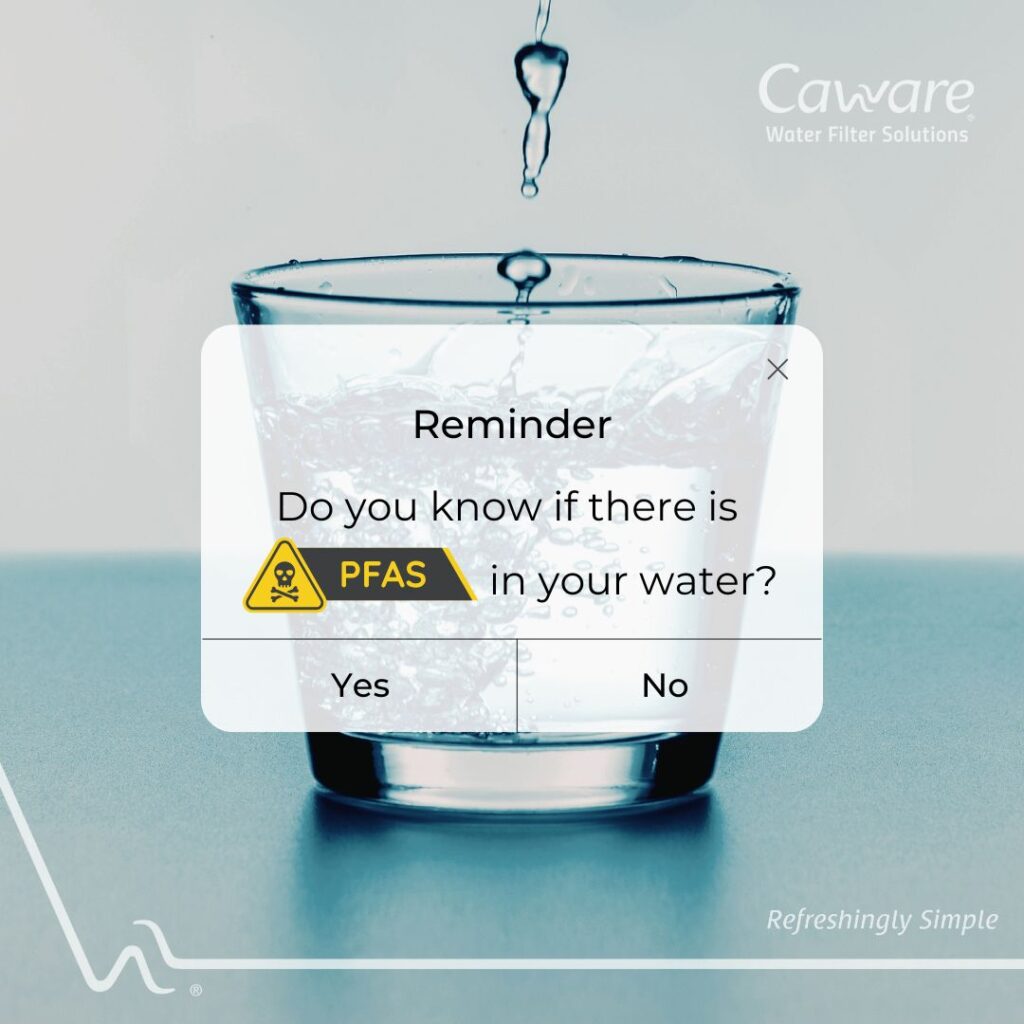
PFAS is called “forever chemicals”—but are they really forever in water?
PFAS (per- and polyfluoroalkyl substances) are a group of man-made chemicals widely used for their resistance to heat, oil, and water.
But that same durability is what makes them a growing global concern—especially in drinking water.
So why is everyone talking about PFAS now?

Because regulations are tightening.
In the U.S., the National Primary Drinking Water Regulation has introduced the first nationwide enforceable limits:
Covers 6 specific PFAS
Applies to all public water systems
Sets PFOA / PFOS at 4 ppt
Other PFAS regulated at 10 ppt or via Hazard Index
Meanwhile, in Europe, the Drinking Water Directive takes a broader approach:
Total PFAS: 0.5 µg/L (500 ppt)
Sum of 20 PFAS: 0.1 µg/L (100 ppt)
Requires regular monitoring
Ensures public transparency
Different paths—but one clear direction:
PFAS in water is no longer ignored.
So, are PFAS really “forever” in water?
With the right filtration approach, Total PFAS reduction is achievable—helping move toward PFAS-safe or even PFAS-free water.
Learn more about how Total PFAS can be reduced:
Do you know if there is PFAS in your water?


 Because regulations are tightening.
 So, are PFAS really “forever” in water?